I Paid a Stranger $30 to Read My Terrible Draft Aloud, and It Ruined Me (In a Good Way)

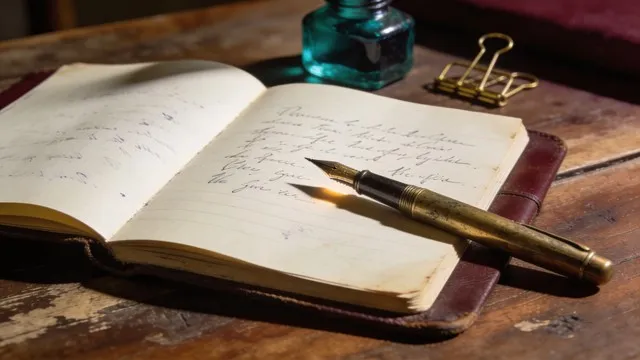
Photo: Angello Lopez angello_pro, CC0, via Wikimedia Commons
The draft was four months old, eleven thousand words, and held together with the literary equivalent of duct tape. I knew it was rough. I'd made peace with rough. Rough is what drafts are for.
Then I paid a guy named Marcus in Austin thirty dollars to read it out loud, and rough stopped being an abstraction. Rough became something with a pulse that lived in my ears.
The Drunkest Idea That Turned Out to Be Sober
Here's how it happened. I was complaining to a friend about how I'd stopped seeing the draft. When you've read your own paragraphs two hundred times, your brain stops reading them and starts reciting them from memory. Every flaw gets airbrushed by familiarity.
My friend, who is not a writer but is annoyingly wise, said: "Man, you edit everything by ear. Why don't you actually use your ear?"
He meant it as a throwaway line. I took it as a commission. That night, slightly past my bedtime, I posted a job on Fiverr: "Voice actor needed. 11,000 words. Fiction. No notes, no feedback, just read it straight. I'll send the file. You send the audio."
Marcus replied in nine minutes. We were in business by morning.
The Most Uncomfortable Thirty Minutes of My Writing Life
When the MP3 arrived, I made myself a cup of coffee, sat down, and pressed play with the confidence of a man about to hear a rough thing get smoothed over by a professional voice.
Reader, it did not get smoothed over. It got magnified.
Marcus had a great voice. Warm, measured, a little gravelly. That was the problem. A good reader doesn't hide bad writing — they frame it. Every limp sentence hung in the air like a piece of furniture that doesn't match the room. Every over-long paragraph created this audible sag, like a mattress with a broken spring. When I'd written a joke, I could hear the beat where a listener would laugh, and the beat where they wouldn't.
There's a moment about eight minutes in where my protagonist "sighs and looks out the window for what felt like the tenth time." I had never noticed that she sighs and looks out the window constantly. Marcus sighed along with her, gently, professionally, and I wanted to crawl under my desk.
But here's the strange part: I couldn't stop listening. Something about hearing the draft as a listener instead of the author dissolved my defensiveness. When I read my own work, I read what I meant. When Marcus read it, I heard what I wrote. Those are two very different documents.
Why Your Ears Catch What Your Eyes Forgive
Writers have known about reading aloud forever. Hemingway did it. So did half your workshop. But reading your own work aloud has a fatal flaw: you're still the performer. You know where to pause. You know which sentence is a setup and which is a punchline. You perform the draft into working better than it is.
A stranger's voice removes all that. Marcus didn't know my intentions. He just had words on a page, and he read them the way a person reads — which is to say, honestly. Rhythm problems became obvious because rhythm is literally all the ear does. Redundant phrasing stuck out because spoken language hates repetition in a way that scanning eyes tolerate.
And the flab. Oh, the flab. Sentences that looked lean on the page turned out to be verbal quicksand. I'd been in love with certain phrases for four months. In Marcus's mouth, they were dead weight, and I heard it instantly.
The Budget Version: You Don't Need Marcus
The Fiverr route works, and I recommend it for a finished-feeling draft. But you can get eighty percent of the value for free, today, with the phone in your pocket.
The Listening Revision Framework:
-
Export the draft to audio. Most phones and word processors have a text-to-speech or speak-selection feature. Google Docs has it under Accessibility settings. Your iPhone can read almost anything aloud. The robotic voice is a feature, not a bug — it has zero emotional investment in flattering you.
-
Listen away from the screen. Go for a walk. Do dishes. Drive somewhere boring. The point is to experience the draft the way a reader eventually will: as sound arriving in sequence, with no ability to skim ahead or back.
-
Don't take notes the first pass. Just listen. Let the bad parts sting. Trust that the ones that really hurt will still be there when you get back.
-
Second pass, hands on the keyboard. Listen again, this time with the document open. Pause and fix as you go, but only fix what you heard a problem with. Don't reread and re-edit — that's how drafts regress.
-
Save the audio. Date it. A month later, listen to the old version and the new one. The difference teaches you more about your own habits than any craft book.
What the Draft Sounded Like Afterward
I cut eleven hundred words. Killed the window-sighing. Restructured three paragraphs that only existed because they sounded smart when I typed them. The draft didn't become good — it became honest, which is the prerequisite for good.
I've since sent Marcus two more jobs. He thinks I'm a small publisher. I have not corrected him.
If your draft has been sitting there for months, quietly failing to improve, try this. Hand it to a voice — a stranger's, a robot's, whatever's cheapest — and do the one thing writers almost never do with their own work: shut up and listen.