The Day I Deleted My 'Literary Voice' Off the Page
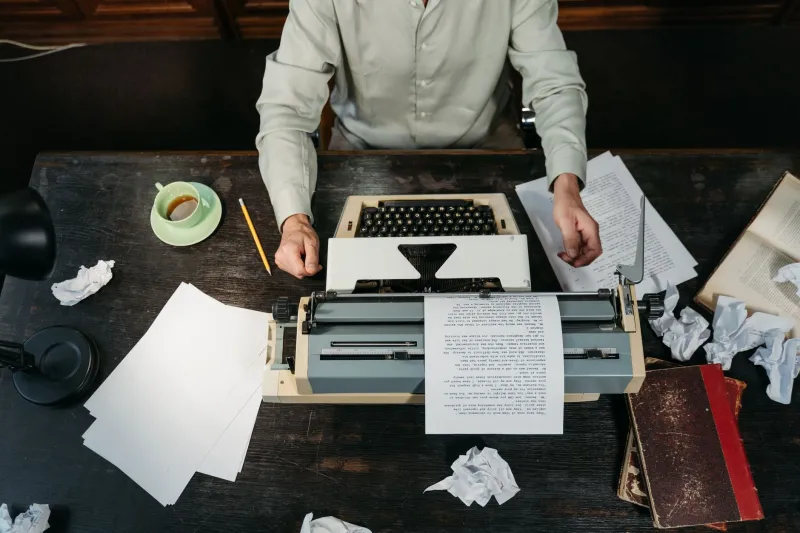
There's a draft somewhere in my old files — I keep it like a trophy from a war I lost — titled Untitled Essay, Final FINAL v9. It is nine revisions of a piece about my grandfather's tackle box, and every single version sounds like it was written by a man who owns a tweed jacket he never wears.
That was me for the better part of a decade. Writing the way I thought writers write.
The Impostor I Was Copying
I had a mental image of a Real Writer, and it was assembled from every mid-century novel and MFA-adjacent essay I'd ever admired. Measured sentences. A certain weathered melancholy. Metaphors that arrived on schedule, like trains. I wrote to that image the way a kid mimics a parent on the phone — all cadence, no content.
The problem wasn't that the imitation was bad. Honestly, it was pretty good. I'd read enough to fake the accent. The problem was that nobody, including me, believed it. The words were load-bearing walls with nothing behind them.
And here's the thing I couldn't see: while I was busy performing literary gravity, my actual voice — the flat, dry, slightly midwestern way I talk when I'm not thinking about it — was leaking into everything anyway. Emails to friends. Grocery lists with jokes on them. The margins of notebooks. The voice I was suppressing was the voice people responded to.
The Paragraph That Broke the Spell
The switch happened at my kitchen table, around midnight, on a deadline I was going to miss. I'd been grinding out a stately, deliberate opening paragraph for the twentieth time when I got fed up and typed a note to my editor: Look, I don't know how to say this fancy, but the tackle box had a rusted Yo-Zuri in it and I think that lure killed more fish than anything else he owned and he never once used it.
I stared at that run-on, ungrammatical, honest sentence and realized it was the first true thing I'd written all night.
I kept it. Fixed almost nothing. The essay ran, and the note I got most often wasn't about the subject — it was people saying it sounded like a person. Like me, specifically, which was funny, because they'd never met me. They just recognized a human being at the wheel.
What I Lost, What I Found
I won't pretend the change was all gain. The conversational voice costs you some things. You lose the ability to hide inside beautiful sentences. You lose a certain deniability — when you write plain, people can tell exactly what you mean, and if what you mean is thin, there's no fog to hide it in. Sounding like yourself means the work can only be as good as you actually are that day.
But here's what came back in exchange, and it's been worth every trade:
- Speed. I stopped drafting in costume. Turns out it's much faster to write as yourself than as a character.
- Readers. Plain writing travels. The folks who email me now aren't other writers — they're plumbers, teachers, my cousin in Tucson. They recognize something.
- Stamina. Impersonation is exhausting. I used to run out of steam two pages in because maintaining an accent takes constant effort. My own voice, it turns out, doesn't tire.
Readers Can Smell the Difference
I used to think authenticity was a soft, inspirational word — the kind of thing on a candle label. I don't anymore. I think it's mechanical. Readers are pattern-recognition machines who've absorbed millions of sentences, and they can feel the seams in a performance the way you can hear when someone's reading cue cards.
The polished voice I chased wasn't evil. It was just borrowed, and borrowed things never quite fit at the shoulders.
These days, when I sit down, my only test is this: would I say this sentence out loud to a friend at a kitchen table, or would I be embarrassed to? If it's the second one, out it goes. The tackle box essay eventually became the piece people still bring up. Not because it was polished.
Because it wasn't.