Five Nos I Keep in a Drawer, and What Each One Bought Me

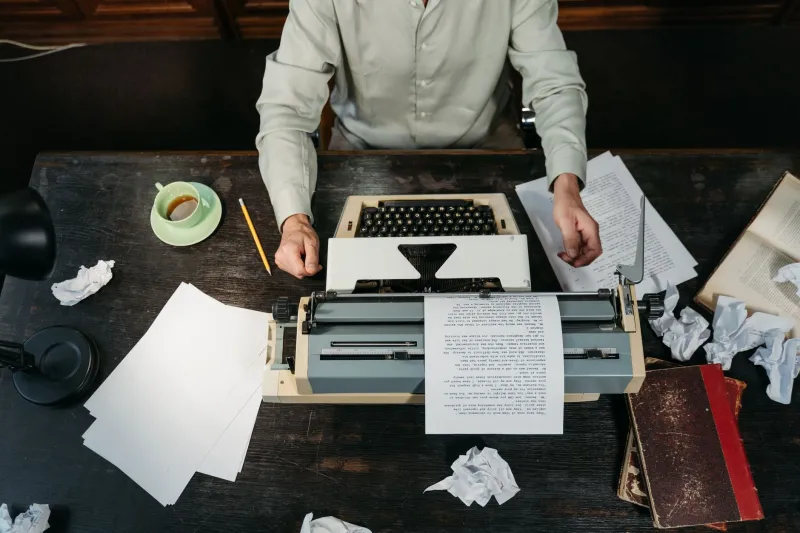
In the bottom drawer of my desk, under a manual typewriter ribbon I keep for reasons I can't explain, there's a manila folder. Inside it: rejection letters. Actual, physical, on-sometimes-official-letterhead rejection letters, going back to the late nineties.
Friends have told me to throw them out. Therapists, probably, would agree. I never have, and I never will. Here's why.
No. 1: The Form Letter That Started It All (1998)
The first rejection I ever received was a single photocopied paragraph with a signature that was clearly a stamp. It thanked me for my submission and wished me luck placing my work "elsewhere."
I was twenty-two and devastated for about a week. Then I noticed something: they'd misspelled my name. Two different ways, in the same letter. I laughed for the first time in days, and something clicked. The people saying no were just people. Tired ones, apparently.
What happened after: I submitted the same piece, lightly revised, to a regional magazine. They published it. It paid $75. I have never valued $75 more.
No. 2: The Handwritten One (2003)
This one hurt worse but taught me more. An editor at a small press took the time to write an actual note: "You can write. This isn't it."
Five words. I taped it above my desk for a year. It stung every time I looked at it, and every time it stung, I asked the only useful question: then what is it? The book I eventually wrote after answering that question became the first thing I was ever genuinely proud of.
What happened after: That book found a home two years later, with a press nobody's heard of. I don't care. It's still in print.
No. 3: The Silence (2009)
Technically not a letter. I submitted to a literary journal and heard nothing — not a form rejection, not a form acceptance, nothing. Eighteen months later I checked their website and my piece wasn't in any issue.
This one taught me the hardest lesson: some doors don't even open enough to say no. You have to decide on your own that the answer was no, close the file yourself, and move on.
What happened after: I rewrote the piece from scratch instead of shopping it around again. The new version was dramatically better. Silence, it turns out, can be a collaborator.
No. 4: The Almost (2014)
An agent requested the full manuscript. I spent three weeks unable to sleep. Then came the pass: "I didn't fall in love the way I need to."
This is the rejection that looks, from the outside, like nothing. No cruelty, no drama. But being close wrecked me more than any form letter. It took me months to open the manuscript again.
What happened after: When I finally did, I read it like a stranger and found the sagging middle I'd been refusing to see. Fixed it. The revision sold within a year.
No. 5: The One I'm Grateful For (2019)
A publication I'd dreamed about for a decade rejected a piece I loved. Polite, professional, final.
I shopped it around, got a yes somewhere smaller, and the piece ended up reaching more readers than anything I'd written to that point — because the smaller outlet promoted it like it mattered, which it did to them.
What happened after: I learned that a no from a big room is sometimes just a redirect to a room where you'll actually fit.
Keep Your Nos
Here's what that manila folder actually is: a record that I kept going. Every letter in there is proof I finished something, sent it out, and survived the answer. That's a longer streak than any award I've won.
If you've got a pile of nos — emails, letters, screenshots of unanswered queries — don't delete them. Reread them in five years. You'll see what I see when I open that drawer: not failure. A paper trail of someone still in the game.