The Month I Became 'He': How Writing Myself in Third Person Broke a Decade of Writer's Block
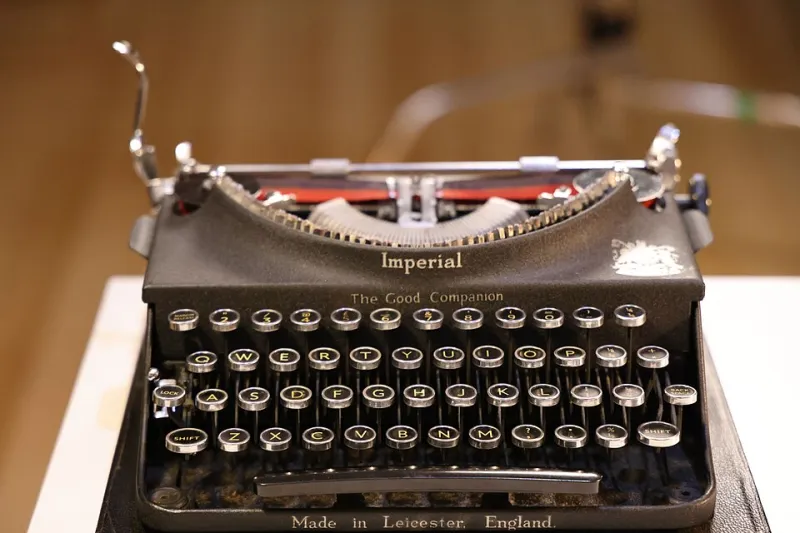
Photo: Bhullargraphic, CC BY-SA 4.0, via Wikimedia Commons
The chapter I'd been avoiding for three years was about my brother. Not because anything dramatic happened — because I knew exactly what I wanted to say about him, and I knew it would sting. Every time I sat down to draft it in first person, I'd get two paragraphs in, feel my ears go hot, and close the laptop.
Then in February, on a cold enough morning that the diner windows in my town had frost ferns on them, I tried something a little ridiculous. I opened a fresh document and started the chapter with: Ron didn't call his brother for eleven months, and he told himself it was because of the election.
And then I just kept going. For four pages. Without stopping once.
The Trick I Stole From My Therapist
My therapist once told me that when a feeling gets too big, it helps to talk about "that part of you" instead of "you." Language creates distance, and distance creates room to breathe. I'd nodded along at the time, but it never occurred to me to drag that trick into my drafting process.
So here was the experiment: for the entire month of February, every draft I wrote about my own life had to use "he." Not "I." The rule was absolute. If I slipped, I didn't scold myself — I just rewrote the sentence. (I slipped constantly for the first week. Old habits have deep roots.)
What surprised me wasn't the gimmick itself. It was what the distance uncovered.
The Guy on the Page Was More Honest Than Me
Here's the thing nobody tells you about first-person memoir: "I" is a defensive position. When you write "I was jealous of my brother," you're not just reporting a feeling — you're confessing it, standing behind it, owning it in front of whoever picks up the book. That's a lot of weight to put on one little pronoun.
But "he was jealous of his brother"? That's a character. And characters get to be complicated, flawed, even unlikable, because that's what characters are for. The reader extends a weird grace to third-person figures that they don't always extend to a first-person narrator.
So the sentences I'd been choking on for years came out in one breath. I wrote about the eleven months of silence with my brother. I wrote about the money I borrowed from my mother in 2016 and never mentioned again. I wrote about the apartment in Albuquerque I left with a security deposit I never asked for, because I was too embarrassed to make the call.
None of this was new information. What was new was the permission structure. The man on the page could be petty and small and human, because he wasn't me. Except, of course, he was.
Where the Distance Actually Helped
After about ten days, I noticed three specific things happening:
I stopped editorializing mid-scene. In first person, I couldn't resist explaining myself — I did this because... — like I was testifying. In third person, I just let the scene play. He drove past the house twice before parking. No commentary. The reader could figure out the nerves. Turns out readers are smart.
I could see my own patterns. Reading "he" on the page was like watching a friend make the same mistake for the fifth time. Suddenly obvious. I counted four separate chapters where the guy flinched away from a hard phone call. Four. I'd never noticed the pattern because "I" was too busy living inside it.
The prose got funnier. This one I did not expect. There's a gentle comedy built into third person — the same distance that lets a novelist like Gary Shteyngart or Nora Ephron (in Heartburn, mostly) land a joke about their own disasters. He had prepared a speech. The speech had four parts. He delivered none of them. Try writing that about yourself in first person without wincing.
The Part Where It Gets Uncomfortable
Around week three, the distance started to feel less like a tool and more like a hiding place. I could write anything — but was I writing it honestly, or was I narrating a stranger from a safe remove?
So I added a second rule: at the end of each writing session, I'd read the day's pages aloud and swap every "he" back to "I" in my mouth. Just to feel it. Some sentences survived the swap fine. A few made my throat tighten, which told me I'd written something true. And a couple made me squirm in a way that told me I'd written something performed — distance dressed up as honesty. Those got cut.
That's the fine print on this trick: third person gets you in the door, but you still have to let the reader meet the real you eventually. The distance is scaffolding, not the building.
What I Kept
The month ended. I went back to "I" for the revision, because a memoir narrated by a man named Ron in the third person is a different, stranger book than the one I'm writing. But a surprising amount of the February draft survived intact — including, finally, the chapter about my brother, which I mailed to him in March. His review: "You could've called."
He's not wrong. But he also said the chapter was good, and he'd know.
If you're stuck inside your own head — and if you write about your own life, you are, some days — try hiring yourself as a character for a month. Give him a name if you want. Give him your worst decade. He can hold what you can't, at least until you're ready to take it back.