I Let Strangers Dictate Their Feelings and Typed Them Into Letters All Weekend
The sign was made from a piece of cardboard and a Sharpie that was dying by the second. It read: FREE LETTER. YOU TALK, I TYPE. That's it. No logo, no QR code, no explanation of what I was doing or why. I figured if people trusted the sign, they'd trust the bench.
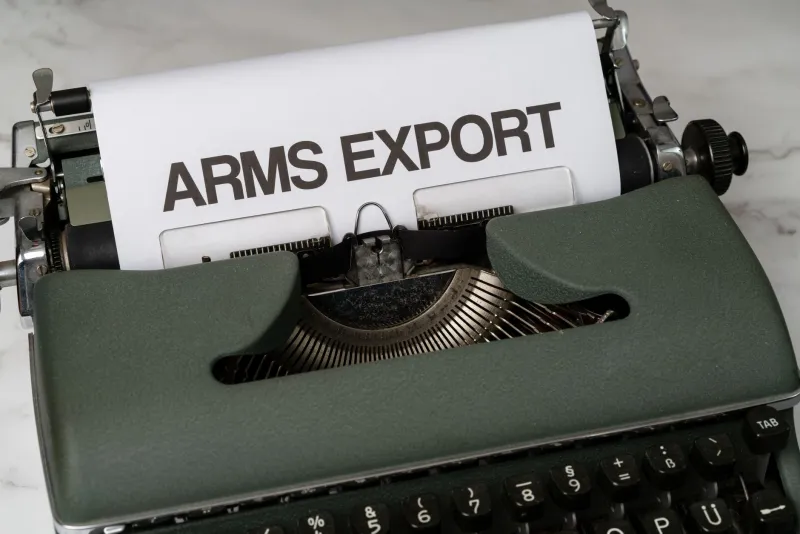
I set up in a small park in St. Louis on a Saturday morning in late April — the kind of Midwest spring day where everyone acts like they've never seen the sun before. Folding table, two chairs, my grandmother's Smith-Corona that I'd cleaned with Q-tips and prayer. By 10 a.m., a man in a Cardinals hat was sitting across from me, staring at the typewriter like it might bite.
"So how does this work?" he asked.
"You tell me who the letter's for and what you want it to say. I write it. You keep it."
"What's the catch?"
"There isn't one. I'm just nosey."
He laughed. Then he told me about his brother.
The Gap Between Feeling and Writing
Here's what I learned by Sunday evening, after forty-two letters: almost nobody can write what they feel, but almost everybody can say it out loud to a stranger.
The gap was enormous. People would sit down, ramble for five minutes in circles, and somewhere in the middle of a story about a lawn mower or a divorce or a dog named Biscuit, they'd drop a sentence so clean and devastating that I'd just stop typing and look at them.
A woman in her sixties told me about her sister's garden, the mulch, the tomatoes, the whole horticultural rundown — and then, mid-sentence: "I just miss having someone who knew me before I knew myself."
She would never have written that sentence. I could see it on her face. But she said it, so I typed it, and when I read the finished letter back to her, she cried into a napkin she'd brought for exactly this purpose. I think she knew. I think everyone knows, roughly, what's inside them. They just can't get it through their hands.
That's the whole trick of writing, by the way. It's not talent. It's getting the thing out of your chest and onto the page without strangling it on the way.
What People Actually Wanted to Say
You'd think, given a free letter to anyone, people would go big. I'm sorry. I love you. Forgive me.
Some did. But most went small, and the small ones wrecked me worse.
A teenager asked me to write to his mom thanking her for "always driving me places." He said it like a joke, then got quiet and said, "No, actually, that's it. That's the whole thing. She drives me everywhere and never complains."
A guy maybe thirty-five dictated a letter to his old boss — not angry, not litigious, just a page explaining that the layoffs had nothing to do with his worth, that he knew that now, and he wanted it in writing somewhere so he could reread it on bad days. He wasn't even going to send it. He just wanted it to exist.
A retired postal worker dictated a letter to her late husband that was 80% complaints about the thermostat and 20% the truest love letter I've ever typed. She made me read it back twice and corrected one word.
People don't want to say big things. They want to say true things, and true things are almost always small.
Holding the Pen Changes Everything
There's something about handing your feelings to someone else to write down that unlocks a door you can't open yourself. It's the same reason people confess to bartenders and hairdressers. I had no stake in these people's lives. I wasn't their kid, their spouse, their therapist. I was just a guy at a table with dirty fingernails from typewriter ribbon.
One man opened with, "Don't judge me," then dictated a letter to his estranged daughter that was so honest it made my teeth hurt. I didn't judge him. Judging people while typing on a manual machine is genuinely difficult — the rhythm of the keys keeps you humble.
By Sunday afternoon, a small crowd had formed. A woman asked if I could write a letter for her dog. I did. The dog seemed unmoved, but the woman framed it.
What I Took Home
I do this writing thing for a living, and I've spent years thinking voice and style and craft were the hard parts. They're not. The hard part is what those forty-two strangers demonstrated all weekend: the distance between the heart and the keyboard.
Since that weekend, I've changed how I draft everything. I talk first. I explain the piece out loud to my dog, to my reflection, to nobody. Then I type down what I said, not what I think I should say. The spoken version is always truer and always more embarrassing, which is how I know it's the good stuff.
If you're stuck on anything — a letter, an email, a eulogy, a text you've rewritten eleven times — say it to someone. Anyone. A stranger at a table is ideal, but a voicemail to yourself works too. Get it out of your mouth before you try to get it through your fingers.
And if you ever see a folding table in a park with a grumpy old typewriter on it, sit down. Somebody there wants to hear what you can't write.