The Year I Wasn't Allowed to Make Anything Up
Somewhere around last October, I realized I hadn't invented a single character in over a year. Not one. Every person on the page was somebody who actually existed, breathing and billing me for coffee.
It started as a dare to myself, then hardened into a rule: for twelve months, no fiction. No invented detectives, no made-up small towns, no composite exes. If I wrote it, it happened — or close enough that I'd be nervous if the person read it.
Here's how that went.
The Rules Were Simple. Following Them Was Not.
The ban had three provisions. One: every character had to be a real person I'd actually met. Two: every setting had to be a place I'd physically stood. Three: I couldn't disguise people so heavily that the exercise became pointless — the whole idea was to write the truth, not a wax museum version of it.
The first month was humiliating. I thought I was a decent observer. Turns out I'd been outsourcing observation to invention for years. When a scene dragged, I'd always been able to make something up. Now, when a conversation I'd actually had went nowhere, it stayed nowhere on the page. Real dialogue is repetitive. Real people say "anyway" and change the subject mid-thought.
But something else started happening. Because I couldn't invent, I had to notice. I started carrying a notebook the way you carry keys — automatically. I eavesdropped at the Waffle House off I-40 with the focus of a court stenographer. I memorized how my uncle taps his wedding ring twice before he disagrees with you. Real life, it turns out, had been handing me better material than my imagination for years. I just hadn't been taking delivery.
The Ethical Tightrope Is Real, and There's No Net
Around month four, I wrote a piece about a friend — someone I care about, someone who is, let's say, larger than life in ways that make great reading and complicated lunch conversations. I wrote it honestly. I sent it to him before publishing. He read it, laughed at the right places, went quiet at one, and said, "You got me. I don't love it, but you got me."
That's the deal with writing about real people. You can be accurate or you can be kind, and sometimes you can't be both. I developed a personal policy: never write about someone's worst moment, never publish anything about a person still raw from the event, and always offer a look beforehand when it's someone I'll see again. Which is most people.
I broke my own policy once, with a stranger — a woman at a rest stop in Kansas who told me her entire life story in the time it took her dog to decide against the grass. I wrote her exactly as she was, because she asked me to, and because some people hand you their story like they've been waiting all day for someone to take it. I hope she finds it someday. I hope she recognizes herself and is pleased.
What a Year of Truth Did to My Fiction
The surprise came when the year ended and I sat down to write a story — a real invented one, with a made-up woman in a made-up town. My hands felt different on the wheel.
The invented people I wrote after that year were sharper. Not because I'd learned tricks, but because I'd spent twelve months studying how humans actually move through rooms. Fiction stopped being a substitute for observation and became a distillation of it. My made-up characters stopped monologuing. My made-up towns got real weather.
Here's the thing I tell every writer who asks: the ban was never really about honesty. It was about attention. Fiction lets you get lazy because you control everything. Reality doesn't negotiate. Spend enough time writing what actually happened, and you learn what a scene needs to feel true — even when every word of it is a lie.
Would I Do It Again?
Yes, but shorter. Six months gets you the training. A year gets you a few awkward dinners.
I kept two friendships slightly dented, gained a notebook full of the best material of my life, and came back to fiction the way you come home from a long trip — same house, new eyes. The characters I invent now owe their pulse to people who never agreed to be characters. I owe them all a drink.
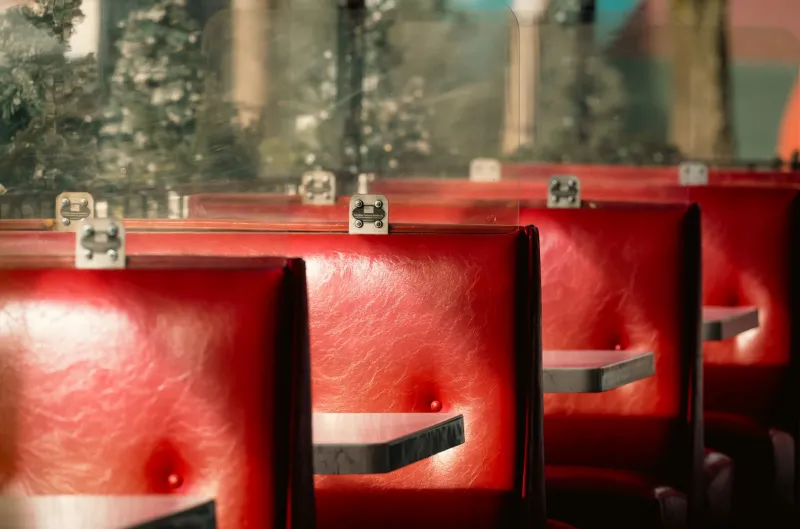
Most of them would take it black, at a diner booth, at seven in the morning. Which is exactly where I'd write about them anyway.